
Loading...
Serving Mountain View, CA and surrounding areas. (650) 582-0573
Crumbling mortar, uneven steps, or a retaining wall that looks worse every winter - we build and repair stone masonry in Mountain View with proper bases, city permits handled, and results that hold up in Bay Area soil and seismic conditions.
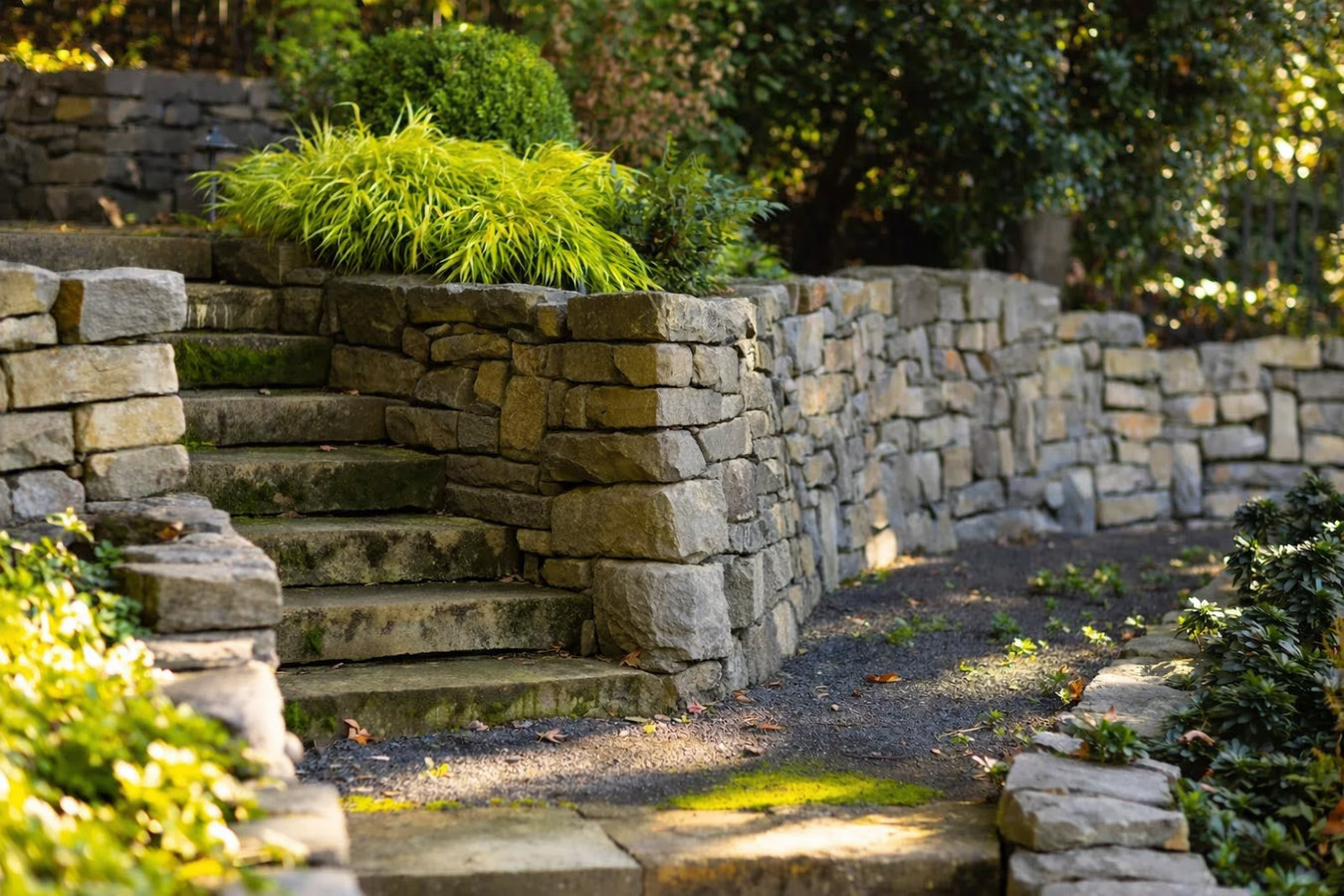
Stone masonry in Mountain View means building or repairing structures using natural or manufactured stone, set with mortar on a properly prepared base. This covers garden walls, retaining walls, patios, steps, and outdoor features. Most projects take one to five days depending on scope, and any retaining wall above a certain height requires a city permit before work begins.
The part most homeowners never see is the most important: what sits underneath the stone. Mountain View's clay-heavy soils expand when wet and shrink when dry, and that seasonal movement is one of the main reasons stone patios and walls fail within a few years of installation. A mason who accounts for local soil conditions during base preparation is the difference between a surface that stays flat for decades and one that starts shifting after the first wet season. Homeowners planning to pair stone features with other masonry on the property will find that brick pointing repairs can often be scheduled alongside new stone work so the whole property gets attention in a single mobilization.
For homeowners who want the look of natural stone on an existing wall without starting from scratch, stone veneer installation is a related option that adds a natural stone face to a concrete or block structure at a lighter weight and lower cost than full stonework.
If a stone wall in your yard is tilting forward - even slightly - the base has likely shifted or the wall was not built to handle the soil pressure behind it. In Mountain View's clay soils, this movement is common after a wet winter when the ground swells and pushes against the structure. A leaning wall can fail suddenly, so have a mason assess it before the next rainy season.
Run your finger along the joints on an older wall or patio. If the mortar crumbles, feels sandy, or has fallen out in places, water is getting in. Open joints speed up the breakdown, especially during Mountain View's winter rains when moisture works through and weakens the bond season after season. Catching this early means repointing rather than a full rebuild.
Mountain View's rainy season can deliver concentrated rainfall in short bursts. If your stone patio or walkway holds standing water after a storm, or if water is running toward your house rather than away from it, the surface was not sloped correctly or has shifted over time. A mason can re-level the surface and improve drainage before the problem reaches your foundation.
Older Mountain View homes - particularly those built in the 1950s through 1970s - often have original stone or brick entry steps that have settled unevenly over the decades. If a step rocks when you stand on it, or if the surface has become slippery from wear, that is a safety issue. Resetting or replacing those steps is a straightforward job and makes an immediate difference in how your home presents.
We cover the full range of residential stone masonry in Mountain View - from replacing crumbling entry steps on a 1960s ranch house to building a new stone retaining wall along a sloped backyard, to installing a flagstone patio designed for year-round outdoor living. Every project starts with proper base preparation: excavation to the right depth, a compacted gravel layer, and a concrete footing where the wall height or load requires one. Stone options range from locally available fieldstone to cut granite, limestone, and manufactured stone, and we help you choose what fits your budget and the character of your home. Where a project touches existing stonework or brickwork, we coordinate brick pointing repairs into the same job so the finished property looks consistent throughout.
Homeowners who want the appearance of natural stone on an existing concrete block or poured wall without the weight and cost of full construction should ask about stone veneer installation as a complementary option. We discuss both approaches during the on-site estimate so you understand the trade-offs before any work begins. Written estimates break down base preparation, labor, materials, and any permit costs so you know exactly what you are agreeing to.
For properties with sloped yards or grade changes where a wall is needed to hold back soil and prevent erosion during Mountain View's wet winters.
Suited to homeowners who want to define planting beds, create tiered yard levels, or add a natural stone border to an outdoor living area.
For homeowners who want a durable, low-maintenance outdoor surface that works year-round in Mountain View's mild climate.
Ideal for replacing crumbling or unsafe original steps on older Mountain View homes where concrete or brick has settled beyond repair.
Mountain View sits on the expansive clay soils common throughout the Santa Clara Valley, and those soils behave differently from almost anywhere else in the country. They swell significantly during the rainy season - typically November through April - and then shrink during the long dry summer. That back-and-forth puts steady stress on any structure that sits directly on the ground. Stone walls and patios built without a deep enough base or proper drainage will shift, crack, or start to lean within a few years. This is a local condition that a contractor from outside the region may not default to addressing correctly. We serve homeowners throughout this part of the Bay Area, including Los Altos and Palo Alto, and soil preparation is a standard part of every stone project we take on.
The city's permit requirements and the prevalence of HOA-governed neighborhoods add another layer that local experience makes much easier to navigate. The City of Mountain View requires permits for retaining walls above a certain height, and a significant share of the city's residential communities - particularly planned developments and townhome clusters near El Camino Real - have HOA rules about wall height, stone color, and front-yard hardscaping. We ask about both at the start of every project. Working through those steps correctly the first time is what keeps finished work on the right side of both the city and your HOA - and on the record when your home sells.
We start with a few quick questions - what you are trying to build or fix, roughly how large the area is, and whether you have any photos. This helps us show up to the site visit prepared. You do not need every answer - just describe what you are seeing.
We visit your property to measure the area, assess drainage and soil conditions, and walk through your stone options. We also flag whether your project will need a city permit - common for retaining walls - so there are no surprises after you say yes to a quote.
If a permit is required, we handle the application with Mountain View's Building Division. Permit processing typically takes two to four weeks. Once approved, the crew excavates the area, compacts the base, and pours any required concrete footing - the step that keeps your finished work stable for decades.
Stones are cut, fitted, and set course by course. When the last stone is placed, we walk the finished project with you before we leave. Fresh mortar needs 24 to 48 hours before it should get wet - we remind you of any precautions before we go.
We reply within one business day. No pressure, no sales pitch - just honest answers and a clear written quote for your Mountain View property.
(650) 582-0573Mountain View's expansive clay soils are one of the most common reasons stone patios and walls fail within a few years of installation. We dig and compact to a depth that accounts for the seasonal swelling and shrinking of the ground underneath - so your surface stays flat and your wall stays plumb through wet winters and dry summers.
Mountain View sits between the Hayward and San Andreas fault systems. Retaining walls and structural masonry built here without proper reinforcement are a genuine risk. We build to California's seismic requirements on every structural project - not because it is required, but because it is what actually holds up in this region. The California Geological Survey maps Mountain View in active seismic hazard zones for good reason.
California Geological SurveyWe file every permit application with Mountain View's Building Division, respond to city questions, and stay through the final inspection sign-off. That documentation protects your home's value in one of the most competitive real estate markets in the country - unpermitted masonry flagged at resale can require costly remediation or demolition before a sale can close.
A large share of Mountain View's residential communities are governed by homeowners associations with rules about wall height, stone color, and front-yard hardscaping. We ask about HOA status on every project before any planning goes further. Getting approval in writing before excavation begins prevents the most expensive possible outcome - being required to tear down finished work.
The Mason Contractors Association of America and the National Park Service Preservation Briefs both publish technical guidance on how stone masonry should be built and maintained. Knowing those standards is the starting point - applying them to Mountain View's specific soil, climate, and permit environment is what produces work that holds up here, not just anywhere.
When the mortar joints in your stone or brick work start to crumble, repointing seals them back up before water gets in and causes deeper damage.
Learn MoreStone veneer applied over an existing concrete or block wall delivers a natural stone appearance with less weight and a faster installation timeline.
Learn MorePermit slots and contractor calendars fill up fast in the dry season - reach out now and we will get your project on the schedule before the summer rush.