
Loading...
Serving Mountain View, CA and surrounding areas. (650) 582-0573
Cracked, bowing, or missing foundation walls put your home at risk. We build reinforced concrete block walls to California seismic code, pull every permit, and back the work with city inspections.
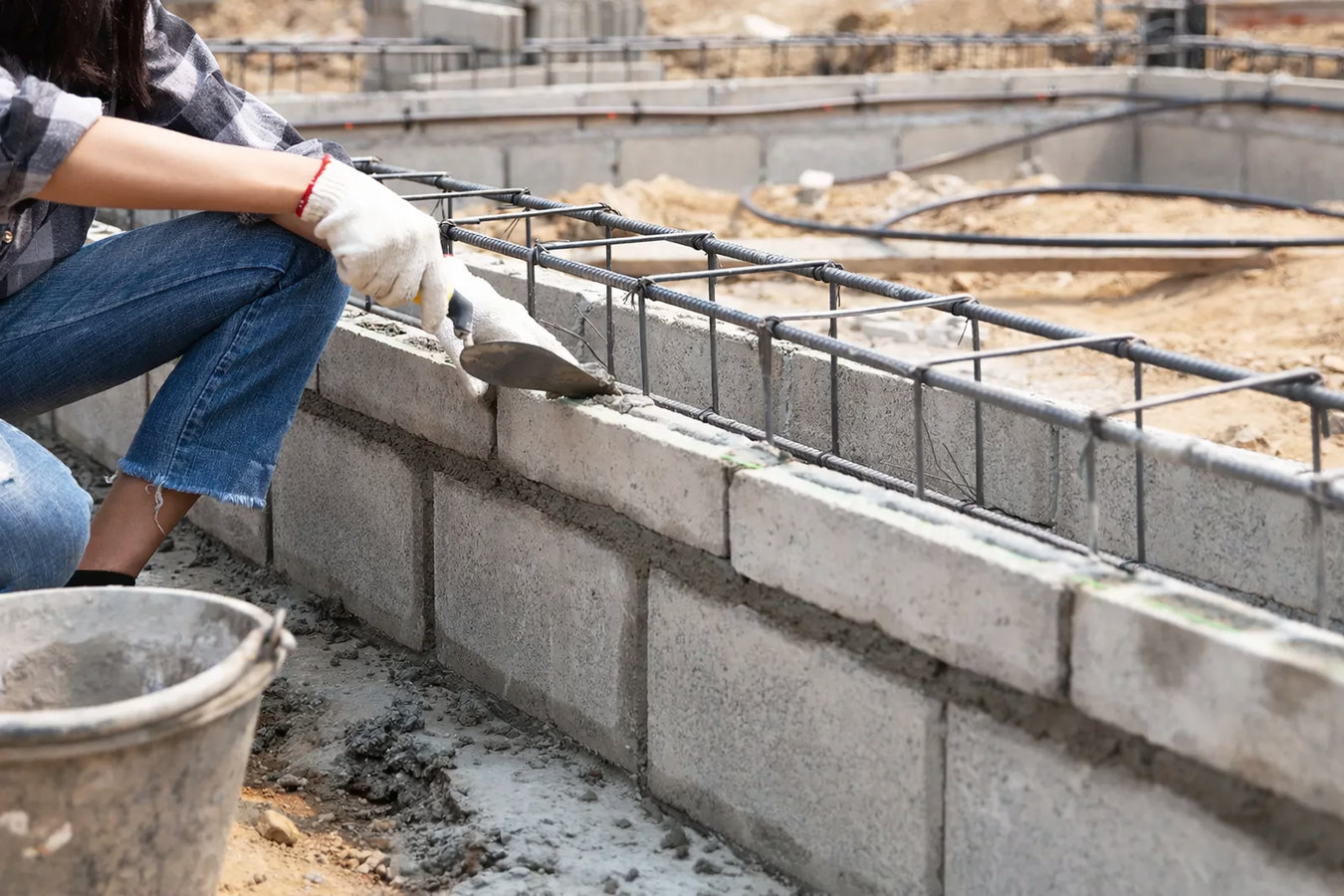
Foundation block wall installation in Mountain View means building a reinforced concrete masonry wall on a poured footing, with steel rods running through the block cores and concrete filling those cores for strength. Most standard residential jobs - a crawl space perimeter wall, a retaining wall along a property line, or a foundation extension for an ADU - take two to five days of active work.
Homeowners in Mountain View typically call us when they spot cracks in an older wall, plan a home addition, or are dealing with soil pressure pushing against a retaining structure. The clay soils in this part of the Santa Clara Valley create ongoing lateral pressure that ordinary walls were not designed to handle. If you are also dealing with cracks above the foundation line, outdoor kitchen masonry can often be paired with foundation work when you are already coordinating a contractor. For structural concerns that go deeper, foundation repair may be the right starting point before any new wall is built.
Every new foundation block wall in Mountain View requires a city permit and at least one inspection. We handle that process from application through final sign-off, so you have clean documentation for your records.
Diagonal cracks - especially ones wider at one end than the other - signal that the wall has shifted or settled unevenly. In Mountain View, where clay soils expand and contract seasonally, these cracks deserve prompt attention. If you can fit a quarter into the crack, it is time to call a mason.
Stand back and look at your foundation or retaining wall from the side. If it curves toward the house rather than standing straight, soil pressure is winning the battle. This is especially common in older Mountain View homes built before current seismic standards. A bowing wall will not fix itself - it will keep moving until it is repaired.
That white, powdery residue on block walls is called efflorescence, and it means water is moving through the wall. On its own it is cosmetic, but in Mountain View's clay-soil environment, persistent moisture accelerates mortar deterioration and can eventually compromise the wall's structure.
Run your finger along the mortar joints between blocks. If the mortar feels soft, sandy, or comes away easily, the wall has lost much of its binding strength. This is common in Mountain View homes built in the 1950s through 1970s, when mortar formulations were less durable than today's. Crumbling mortar is a warning that a full assessment is warranted.
We handle the full range of residential foundation block wall projects in Mountain View. That includes new crawl space perimeter walls, retaining walls holding back sloped yards, foundation extensions for additions and ADUs, and lower garden walls used to define outdoor spaces. Every project follows the same process: a poured concrete footing, steel reinforcement through the block cores, concrete fill, and city permits from start to finish. Homeowners planning a larger backyard project often combine foundation wall work with outdoor kitchen masonry to minimize disruption and coordinate excavation in a single mobilization.
If your existing foundation already shows structural damage - shifting, major cracking, or water intrusion - we recommend addressing those issues through foundation repair before building any new wall against it. Starting with a stable base means the new wall performs the way it should rather than inheriting the problems of the old one.
Best for homeowners adding structural support beneath the house or enclosing an open crawl space with a code-compliant reinforced wall.
Suited to yards where sloped or raised soil needs to be held back from a structure, driveway, or neighboring property.
For homeowners adding an ADU, room addition, or garage where the existing foundation must be extended to carry new loads.
Lower-height structural block walls for homeowners wanting a permanent, clean-edged boundary in their yard.
Mountain View sits close to the San Andreas and Hayward fault systems, which means any structural masonry wall built here must meet California's earthquake-resistant construction standards. That requires more steel reinforcement and stronger mortar mixes than most other states demand. Homeowners in older Mountain View neighborhoods - including properties near Cuesta Park and Rex Manor, where housing stock from the 1950s and 1970s is common - often find walls that were built well before these seismic requirements existed. We work in Sunnyvale and Santa Clara as well, but Mountain View's combination of expansive clay soils and seismic exposure makes proper foundation wall construction particularly critical here.
The clay-heavy soils throughout the Santa Clara Valley expand when wet and shrink when dry. That seasonal movement puts ongoing lateral pressure on foundation walls and is one of the most common causes of cracking and bowing in walls that were not designed with local soil conditions in mind. We size every footing wider and deeper than the minimum to account for this movement, and we apply a waterproofing membrane to the exterior wall face before backfilling. That extra step prevents the white chalky staining - efflorescence - that signals long-term moisture intrusion.
We ask about your project goals, then schedule a free on-site visit - typically within a few days. Wall height, soil conditions, and site access all affect the price, so we need to see your property before quoting. We reply to all inquiries within one business day.
You receive a written quote breaking out labor, materials, and permit fees separately. We file the permit application with the City of Mountain View on your behalf. Approval typically takes two to four weeks, and we handle every step.
We mark utility lines, excavate to the required depth, and pour your concrete footing. In Mountain View's climate, we allow two to three days of curing time before stacking blocks. The city inspector may visit at this stage to verify the footing.
Once the footing is approved, we stack and mortar the blocks, run steel rods through the cores, and fill them with concrete. Most residential walls take one to three days of block work. After completion, the city inspector does a final review and we clean the site before leaving.
We reply within one business day. No obligation, no pressure - just a straight answer and a written quote.
(650) 582-0573Every wall we build meets California's seismic construction requirements for this region - more steel reinforcement and stronger mortar than walls in most other states. You get a wall designed for the shaking this area actually experiences, not a minimum-spec job dressed up to look adequate.
We file every permit required by the City of Mountain View before work begins and stay through every required inspection. That documentation goes in your file and protects your home when you sell. No surprise unpermitted-work disclosures during escrow.
Mountain View's clay-heavy soils expand when wet and shrink when dry. We size and reinforce every footing to account for that seasonal movement, so you are not watching new cracks appear after the first rainy season. The work accounts for what is actually in the ground beneath your property.
Many Mountain View properties have narrow side yards that create staging challenges. We assess your site access in person before quoting, so the price you agree to is the price you pay. Contractors affiliated with the Masonry Institute of America follow standards that apply here.
The Masonry Institute of America and the Concrete Masonry Association of California and Nevada both set standards for structural masonry work in seismic regions. When you combine those standards with genuine local experience in Mountain View's soil conditions, you get a wall that holds up to what this area actually demands - not just what looks good on a quote.
Turn your backyard into a permanent outdoor cooking and entertaining space built from brick, stone, or concrete block.
Learn MoreAddress cracks, settling, and structural shifts in your existing foundation before they spread to other areas of the home.
Learn MoreMountain View's dry season books up quickly - reach out now to lock in your start date before the fall rains arrive.